Building My Gambrel Roof Shed: A Journey from Foundation to Completion

Introduction

For a long time, I wanted to build something with my own hands—something that would challenge my skills and expand my understanding of construction. When I finally decided to build a shed, I had no idea just how much I would learn along the way. This project turned into a deep dive into site preparation, framing, roofing, and finishing work. Every step brought its own challenges, but by the end, I had a functional and aesthetically pleasing shed with a gambrel roof that not only met my storage needs but also stood as a testament to my perseverance.


Step 1: Site Preparation and Foundation

The first challenge was site preparation. Before I could even begin, I had to disassemble the old small plastic shed that previously occupied the space. In researching local building regulations, I discovered that the maximum shed size before requiring a permit was 12’x10’—which, coincidentally, matched the exact dimensions of my planned build. Once the old shed was cleared, I focused on making sure everything was level and squared, as any errors at this stage would ripple throughout the build. I used an electric auger to dig holes for the posts, a post-leveling tool to ensure everything was properly aligned, and concrete to set the base. It was labor-intensive, but getting this foundation right was crucial to the stability of the structure.

Lesson Learned:

  • Proper planning and double-checking measurements early on save significant trouble later.
  • Using an electric auger and securing posts ensures alignment during concrete setting.

Step 2: Wall Framing and Assembly

With the foundation in place, I moved on to framing the walls. I followed the instructions from Essential Craftsman and other resources, treating the pre-cut lumber like a giant puzzle. However, I quickly learned that not all lumber is perfectly straight. Warping was a real issue, requiring clamps and some creative problem-solving to get everything flush.

Lesson Learned:

  • Always check your materials before assembling.
  • Use opposing warps strategically to balance each other out.
  • For wall studs, orient the bow shape (concave side) inward to ensure the drywall or sheathing presses it flat.
  • For plates and joists, place the crown (convex side) upward so that the weight of the structure helps level them out over time.
  • Clamping and minor adjustments can go a long way in getting a tight fit.

Step 3: Raising the Walls and Roofing

Once the walls were up, the next challenge was the gambrel roof. Unlike a traditional shed roof, the gambrel design maximized vertical space. Since I was using prebuilt materials, I didn’t have to cut the rafters, but I still needed to ensure precise measuring and spacing for proper alignment. The only materials I had to cut were part of the decking, including the plywood, floor joists, and foundation posts. Once these were in place, the structure really started taking shape.

For sheathing and waterproofing, I used tar paper, but knowing what I know now, I would opt for a synthetic underlayment for better durability and ease of use.

Lesson Learned:

  • A gambrel roof maximizes storage but requires meticulous rafter placement.
  • Proper roofing underlayment matters for longevity and water resistance.

Step 4: Painting and Finishing Touches

Painting was another learning experience. I used an HVLP sprayer for efficiency and touched up corners with a brush. While it saved time, I realized too late that painter’s tape would have been a good investment to keep edges cleaner.

Inside, I designed, planned, and fabricated a loft for extra storage, making use of the high ceiling created by the gambrel design. This involved cutting the wood, carefully considering the assembly process, and improvising solutions to interface with the rafters while positioning the plywood correctly. This was a game-changer for storage efficiency and a rewarding challenge in structural problem-solving.

Lesson Learned:

  • A sprayer speeds up painting but requires good masking to prevent overspray.
  • Vertical space is valuable—adding a loft made the shed far more functional.

Materials, Tools, Skills, and Costs

Materials Used:

  • Shed Kit: (~$3,500)
  • Foundation and Decking Materials: (~$1,000)
    • Concrete for posts & form tubes
    • Treated 4×4 posts, treated 2x4s, plywood
    • Various fasteners, screws, and brackets
  • Paint and Roofing Supplies: (~$500-$1,000)
    • Tar paper for roofing (though I’d opt for synthetic underlayment next time)
  • Loft Materials: (~$500)
    • Plywood for flooring and loft

Tools Required:

  • Electric auger for post holes
  • String, string level, grading stakes, post-leveling tool
  • HVLP paint sprayer / brushes / rollers
  • Circular saw for cutting plywood, joists, and foundation posts (with rip cutting jig)
  • Clamps for aligning warped lumber
  • Power drill and impact driver for assembly
  • Measuring tape, speed square, and level for precision
  • Ladders and supports for roof and loft installation

Skills Learned and Applied:

  • Site preparation and leveling
  • Framing and proper wood orientation techniques
  • Roofing and waterproofing
  • Loft design and fabrication
  • Efficient painting techniques
  • Problem-solving unexpected issues like warping and material alignment

Part 2 – Coming: Moving the Shed


Writing Process: Making It Work in a Busy Schedule

Writing can often be a laborious process, and with a busy schedule, I rarely sit down to write in this kind of forum. However, I found a way to make it less painful so that it actually happens—and more importantly, so I can remember my own lessons. My process goes like this:

  1. Do a thing that I learn from (like build a shed).
  2. Talk to ChatGPT about it (Advanced Voice Mode).
  3. Collaborate on it using Canvas.
  4. Post.

This method has made writing reflections far more manageable and enjoyable, allowing me to capture my experiences in a structured way without feeling overwhelmed.


Conclusion: A Transformational Experience

Building this shed was more than just a project; it was a masterclass in problem-solving, patience, and craftsmanship. I went in hoping to create a functional storage space and came out with a deeper appreciation for construction. From site prep to roofing, every step brought its own lessons, and I walked away with a structure I’m proud of.

Would I do it again? Absolutely—but next time, I’ll plan even better from the start. If you’re considering building a shed, my biggest advice is to double-check everything at each stage, stay flexible, and embrace the learning process. After all, the real reward isn’t just the final product, but the skills and confidence you gain along the way.
The Good Module System

What is the Good Module System?

The good module system is a way of organization that I’ve been developing over the years. It’s particularly oriented to storage areas (garage, storage unit, shed, closet) rather than living areas, although some principles translate. This distinction is to avoid aesthetic constraints of living areas. The system provides a direction of goodness for organization and defines what’s good enough. It bakes in lessons and watch-outs from practical failings. This system is most useful when dealing with a lot of stuff and space is a constraint.

In short, it uses shelves, racks, cabinets, and compartments to house “good modules” filled with objects in a sensible, searchable, and space-efficient way. This begs a question…


What is a Good Module?

Basically, a good module is a labeled container that contains related items. Ground-breaking, I know. Let’s get into the nuanced specification:

Specifications of a Good Module Container

  1. The container can close
  2. The container is stackable
  3. The container is durable (e.g., can be lifted when filled)
  4. The container is reasonably full
  5. The container is labeled with the theme of the contents (e.g., paints, art supplies, glues, etc.). The more specific, the better.
  6. The container has a place to live (e.g., spot on a shelf, in a stack of Good Modules)
  7. The container is regular, that is like other containers (e.g., same storage bin or box)
  8. The container has handles

Specifications of a Good Module Contents

  1. The contents are related to each other and relate to the labeled theme
  2. Groups of closely related items are bundled (e.g., binding papers together, bagging small parts together)
  3. Individual items are compacted or bundled (e.g., rope is bundled, wires are wrapped and twist tied, fabrics are folded)
  4. The items are useful and functional. Non-functional items can be moved to a “Broken – To Fix” Good Module.

Not Quite Perfect

A Good Module will never be totally perfect. All the specifications are hard to hit. Themes are hard to hit perfectly. Since this is a living system of new items and retiring items, existing modules get repurposed, relabeled, and reorganized. Consider these specifications as guidelines to aim for and not strict requirements.

The Pumpkin Analogy

While the details have faded, I heard an analogy from a neuroscientist that resonated with me. When a person is holding one pumpkin, their brain has a signature that indicates they’re holding one object. When a person is holding ten small pumpkins, their brain indicates they’re holding many objects. When a person is holding a box with ten small pumpkins, their brain indicates they’re holding one object.

Similarly, by containing our stuff in modules, we are simplifying our perceptual/mental landscape and the task of moving/reorganizing.


Using the System

An Organization Practice

Creating and using Good Modules is a practice. Time must be dedicated to this task to make it work. Chaos accumulates. Things are used and pile up or are put away haphazardly. New items arise, modules fill up, and things deserve retirement. Spend the time and effort and the system pays a reward.

Saving Thought

An unorganized space makes me anxious. Early attempts I’ve made at organization like binning items in containers without labels, caused me to loose them frequently. I get peeved when I have to open up the same thought process over and over. Where is this thing? Which box did I put it in? Was I going to donate this thing? By using this system, thought and anxiety can be spared by having incremental progress that has staying power with time.

Generic Principles

The Good Module system outlines many suggestions and principles. I often apply these generally and recursively. For instance, I could have a container of cables and wires. I’d label the bin, and also bag and label the similar wires (e.g., USB A, USB C, USB Micro, etc.). Put another way, containers can have subcontainers.


Choosing Containers

It is best to have fewer types of containers. For example, I typically use Costco plastic totes and storage bins, and SmoothMove Bankers Boxes (small – 12″x12″x16″). The benefit of minimizing the types of containers is that the storage method (e.g., shelves, cabinets) can be customized to efficiently accommodate regular containers. Haphazard containers often take up more space than is necessary. Of course, irregular containers are useful whether it is because you already own it or it is the original packaging. Ideally, I am for 60-80% of modules to be regular containers.

Buying into a System

There are off-the-shelf systems for organization, like the Ikea Kallax. I think it is great. It’s stackable, volume-efficient, and heck, I can stand on it. The only challenge with a system like that is it can get pricey. That’s why it’s dangerous for me to go into the Container Store. Once you buy into a system, you’re locked it. I prefer to use long-standing brands with sturdy products. I’ve gotten burned by breaking particle-board faux-Kallaxs from Amazon. Now what do I do with all the bins I got for it?

Using Original Packaging

I’m torn on using and keeping original packaging. The pro is that there is already a box the holds the product. The con is that it may not live in the box typically, the box is wasted space, and the box is irregularly sized. I think the original packaging is worth keeping if: 1) it is used to store the item when not in use, 2) the item comes with small specific parts (e.g., cleaning tools, replacements, etc.), and 3) if it doesn’t fit into a regular container. This needs to be considered on a case-by-case basis. Just don’t store empty or mostly empty boxes around, “just in case”. Better to bundle up the small parts if they exist and ditch the box.

Lessons Learned on Containers

  • Make sure it is liftable and durable
  • Make sure it has a place it fits
  • Make sure it can fit through doors (like the attic door)
  • Make sure it has handles
  • If stored outside, make sure it is weatherproof

Labeling Containers

Thematic Label

The thematic label gives a sense of what the contents of the module are. I use a label maker to print these labels on the fly. I’ve also used a sharpie and white electrical tape. I like stick-on labels as they can be easily overwritten or removed. When organizing, theming, and labeling items and modules, there are countless options depending on the stuff that’s there. Making those themes is it’s own kind of art. I oscillate between the fast and loose approach (e.g., Electronics I, Electronics II …) and a more precise method (e.g., Electronic Tools, Electronic Components, etc). The latter is better, but that can come in time.

Standard Themes

There are a few standard themes that are widely applicable and are useful buckets to have:

  • To Organize – Miscellaneous
  • Trash – General
  • Trash – Special Disposal (e.g., batteries, light bulbs, electronics)
  • Broken – To Fix
  • To Donate (possibly broken out by location, e.g., GoodWill)

Goodness Label

This label indicates if the module is a Good Module or not. I use colored circular stickers to indicate this. Green means Good Module, in that I’ve check the container and it’s contents and I meet enough specifications that I’m satisfied. A blue sticker means investigate, in that when I have time, I should reorganize the container. Loose items by default are not Good Modules. I like to give special color stickers to the “Standard Themes” above.

When placing a Good Module sticker, I may also write in sharpie the year (e.g., ’23) to signal when I lasted thoroughly assessed it. If 2-5 years down the line, I can take a look again, I can see if it still makes sense. Maybe it’s time to retire some of its contents or pull out any nonsense that found its way in.

Location Label

This label indicates where the module should live. This is the cherry-on-top for a really neat Good Module. This only needs to be as specific as the room (e.g., shed, garage, attic). This is useful if the items are used rarely or seasonally. Doing this saves some thought when it comes time to organize again.

Container Inventory

A creme-de-la-creme Good Module has an inventory sheet, where its contents are listed inside or outside. Only after hitting the low-hanging-fruit should this be done. I like to use laminated grid paper sheets and writing with sharpie. This means that the inventory won’t get easily damaged or smudged. You can erase sharpie with rubbing alcohol. An inventory on the outside of a container can be affixed with double-sided tape or photo corners, but make sure its secure. A fail-safe for if it falls off is to note on the inventory which module it goes to.


Dealing with Stuff (Items)

You have something that doesn’t have a good home. Maybe it has been living on an open horizontal surface for weeks, months, or years. What to do? This is a challenging and often emotional part. Definitely more an art than a science. The method is pick up the item and decide: 1) Do I keep it, 2) Do I donate it, or 3) Do I throw it away?

When making that decision, consider the following questions:

  • What purpose does this thing serve for me now?
  • When have I last used it?
  • Would I buy it again if I didn’t have it?
  • Do I honestly plan on using it in the next 2 years?

I’m guilty of keeping odds and ends on the off chance that I’d use it in some project. Maybe I will, but also maybe I’d also buy new components to my need because I’ve forgotten I kept this thing. Many times, it’s better to get something “just in time,” rather than keep it “just in case.”

Thank You for Your Service

Marie Kondo’s book “The Life-Changing Magic of Tidying Up” is great and covers the topic of “dealing with stuff” well. One particular technique I found invaluable in donating or trashing items is to thank the object for its service in my life. Once its been thanked, I am much more comfortable to let it go.

Disassembly

When I can’t bear to be rid of something, I may disassemble it for storage. I make sure that everything stays together (bagging or wrapping in plastic wrap). This can save a lot of volume, especially if something is use very infrequently. One example is taking the legs off my table saw. It’s useable without the legs, the legs were wobbly, and it’s more compact without them. If I’m scrapping something, I’ve disassembled it and kept only the components that may possibly be useful later: screws, batteries, motors.


Container Management

Now that you have all these containers and Good Modules, where to put them? The shelves and cabinets are the container management. The most primitive management is the humble stack. It makes getting the bottom item a pain but works in a pinch. Here are some considerations for container management:

  • Volumetric Efficiency – Does the system make good utilization of the vertical and horizontal space?
  • Container Size – How big of containers can it fit?
  • Customizability – Can you change the spacing of the shelving?
  • Movability – Can the shelving roll?
  • Sturdiness – Can this handle heavy weights?
  • Accessibility – Can modules be easily accessed (e.g., not overly stacked, heavy items not too high, etc.)

My favorite container management systems are Stainless Steel Wire Racks on Casters and Kallax. That said, using what’s available or getting for-this type organizers makes sense in a lot of cases. When space is constrained, it’s worth to reopen the question of is this the right organizer? Can I be more volumetrically efficient? I built a loft in my shed to add more space. Ceiling organizers are brilliant. Upgrading shelves can be a big win.

Special Containers – Drawers

There are a few special containers. These are chests of drawers or toolboxes. In this case, consider each drawer its own module, complete with thematic labeling and containing related items.

Customized Container Managers

If you’re handy, you can build custom structures to work around large objects. These can be made 2x4s and plywood. The rub is that these are hard to make customizable. The big benefit here is that you can have dedicated cubbies and spots for awkward or large items.


Closing

This is the Good Module system. It’s been useful for me. I plan to continue to use and refine it. I hope it is useful to you. Thank you for reading.

On Modularity & 3D Printing

To make something modular means that it can be deattached, measured, and weighed. It has properties of its own and it makes sense as a separate unit. Furthermore, it has known methods to interface with other modules. There are a number of properties that good modules have:

  • Quickly deattachable, and ideally minimally disruptive to the paired system
  • Standard interconnections, minimizing type and number of joining parts
  • Specific-function optimized
  • Unobtrusive in size & weight
  • Stable & durable
  • Regular geometry (e.g. stackable)

Modularity is a recursive concept, especially if a module can be considered as generically as part. Systems or assemblies are made of parts. Modules made of modules. Complex systems are systems of systems. Modules of modules of modules. These properties are great for documentation, repair, assembly, and engineering in general. In system design, I aim for Design for Modularity.


What does this mean? When I design, I want things that fulfill these criteria and traits as much as possible. I do so in order to help maintain their usefulness and adaptability.

Modular & Standard Parts

Hardware stores and Amazon are full of standard parts. The best of them are modular systems. There are many modular systems that are wide spread. One of my favorites and a go-to standard in mechanical prototyping is 8020 aluminium extrusion or more generally t-slot aluminium. In which a square bar of aluminium has a 4 slots going down the length. These slots are t-shaped and accept t-nuts which allow for various pieces of hardware to be mounted to them. Hardware mounts can be brackets/plates to hold these bars together into frames and boxes. They can be functional like joints and sliders. 3D printers are often made of t-slot aluminium. $200 on Ebay can buy a mess of “2020” (20 mm x 20 mm) t-slot aluminium, screw, t-nuts, and brackets. An angle grinder and file set can allow for cutting the bar at home. The consistency of the parts means that only a few types of hardware are needed and they can be bought economically in bulk. The modularity of the system, means that old projects can be improved or scrapped for parts with minimal time or waste.


Here are a few standard parts that are good to have (the most frequently used by me are bolded):

  • 2×4″ Lumber
  • Metal (aluminium & steel) & wood dowel rods (various diameters – 10 mm & 5 mm)
  • Plywood 1/2″ thick
  • “Thin” sheet material (1/4″ – 1/8″ thick) (acrylic, MDF, HDPE)  
  • ISO O-rings – For sealing air / liquids
  • PVC piping
  • 2020 T-slot Aluminium & t-nuts
  • 608-2RS Type Ball Bearings
  • Metric “M” screws (M3, M4, M5, M6, M8)
    • Length (as needed)
      • Most commonly 5, 10, 15, 20 mm
    • Size (diameter in mm)
      • M3-M5 – Small parts & 2020 aluminium
      • M6-M8 – Heavy duty mechanisms
      • Larger or smaller – As necessary for design & function
      • Imperial vs. Metric – Use equivalent imperial if necessary, but its less easy for my simple mind than metric
    • Thread Type:
      • Machine – For threading into nuts
      • Wood – For pointed tip and coarse threads for screwing into wood
      • Self-Tapping – For self-drilling into sheet metal
    • Socket Type:
      • Phillips Head – For use with a normal screwdriver
      • Allen Head – For use with an allen wrench
    • Socket Shape:
      • Button – Low-profile
      • Socket – High strength
      • Counter-sunk – TK Flat-profile when screwed into counter-sunk surface
      • Hex – Nut-like head that can be rotated with 3D printed knobs
      • Set – Embedded screw for fixing positioning
    • Nuts:
      • Standard – For most cases
      • Locking – For vibration suitations
      • Threaded Inserts – For threading 3D prints
    • Washers:
      • Standard – For most cases
      • Locking – For vibration suitations
      • Nylon – For rotating joints

As your parts and designs become less standard, it will take more work to design, source parts, and document. The more standard parts are used, the more designs can be recycled. I like to get a few variety kits and then buy bulk quantity replacements if I run out of a type of standard hardware (e.g. screw, nut, etc).


These standard parts, with the right tools to process them, and a large 3D printer is sufficient to make countless functional items. These alone can make the a house, a desk, and rudiments of a 3D printer. Extended functionality that can approximate virtually any commercial product can be further obtained with the additional of other standard parts not listed. For example, an FDM 3D printer can be made with the addition of: stepper motors, stepper drivers, a microcontroller, power source, cable chain, linear bearings, threaded rod, and an extrusion head. As digital manufacturing methods mature, more of these can be printed and fewer need to be bought. 


In trying to use standard components, I hope to gain a general functional understanding of mechanical and electrical engineering. I aim to slowly understand and utilize more modular systems to expand the functionality I can create.


Digital Fabrication, 3D Printing, Standard Parts, & Modularity

3D printing and standard parts are a match made in heaven. They shine where the other fails. These complementary characteristics allow for faster and easier design of a great diversity of objects and functions.

Standard Parts:

  • Pros
    • Cheap & available in bulk
    • Predictable in performance
    • Durable
    • Easy to design with & process
  • Cons
    • Not customizable / limit scope of function

3D Printed Parts:

  • Pros
    • Customizable to virtually any shape / application
    • Cheap to manufacture a few parts
  • Cons
    • Unreliable precision
    • Costly or time-consuming to make large / many pieces
    • Need to tinker to achieve target durability & functionality

Digital Fabricated Parts:

While 3D printers allow for the direct creation of custom or standard parts. The digital fabrication tools of CNC cutters provide a way to turn standard materials (e.g. plywood) into standard (or custom) parts thus leveraging their predictable properties and providing the flexibility of customization.

Hybrid Standard & 3D-Printed Systems

By coupling the two and looking to use each as modules as part of a system, you can play each of the strengths and diminish the weaknesses.

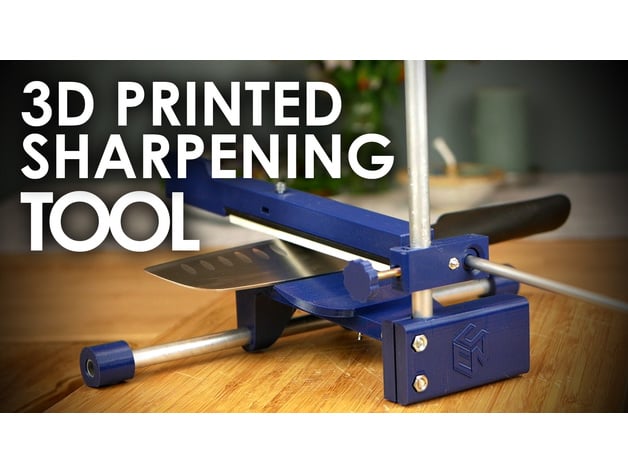
For example, a standard part – 3D print hybrid of CNC Kitchen’s knife sharpener uses aluminium rods and screws to connect 3D printed pieces together. These provide strong, reliable connections that don’t take any time to print. This allows for a relatively small amount of plastic (and thus print time/material) to be joined together into a larger functional mechanism. With the addition of a set of wetstones, the end production is a tool that surpasses most on the market and at a fraction of the price.

http://thingiverse.com/thing:1274297

3D Printing Modularization Principles

Here are some principles I’ve identified in designs I’ve seen and in my design process with modularizing 3D prints.

Principle 1: Join Digitally Fabricated / 3D Printed Pieces with Standard Parts

Whenever joining two or more 3D printed pieces, it is best to use standard parts or designs to do so. These can be 3D printed (snap pins, modular connectors, snap-fittings) but some tinkering will be needed to ensure the right materials and tolerances are achieved. When commercial standard parts are used, the outcome is very repeatable and predictable. 


Principle 2: Break Up Large Areas into Pieces

Large areas should be broken up to allow for more degree of freedom in the 3D printing (fitting inside the build area, orienting parts to optimize print quality). If possible, replace 3D printed sections with standard structural components (rods, 2020 aluminium, wood, etc) and fasten the 3D printed parts that need the customization to the standard ones. (See example of knife sharpener above).


Principle 3: Develop a Library of Designs & Tools for Modularity

Find a few standards and run with them. For example, explore making parts for t-slot aluminium. Figure out the tools and methods needed to work with t-slot. Get all the knick-knack hardware needed. Find ways to mount to t-slot, mount the t-slot to something else, join t-slot together, make functional mechanisms. As proficiency grows, explore new standard parts. Grow an understanding and library of 3D printed modular designs. Use the modular mounting system, try thread connections, and snap fitting. Try to retrofit an existing item to have modular connectors, for example your desk. Continue to develop ways to connect 3D prints to other things in standard ways and the calibration necessary for your setup. When you’ve locked down a design to focus on, write some notes, and use it often. Modular systems are more useful as they are used more often.

Inspiration / Why Write

This is from my “About” section.

I was inspired to write this blog from two main sources: 1) listening to Principles by Ray Dalio, in which written articulation of life principles is encouraged, and 2) from the urging of a friend who believes that he should have written publicly sooner. I have written in the past, but have abandon two blogs. This is in part because I was structuring my writing like a lot of what I enjoyed seeing online. But this entailed a lot of research, revision, and I felt like I was pushing the style to be “marketery.” Instead here, I want to write as if I was writing to my past self or a future child or a mentee. Particularly aiming descriptions toward: I did this, I failed here, and this is what I think is the right path forward. Not, this is the best way, nor this is the only way. Rather, this is the way that worked for me.


I want to write because I learn in the process of trying to articulate my understanding. I can then easily share my views with others and hopefully that can learn from it. Furthermore, it can be a resource that I can go back to remind myself of principles and details, I can use it refine my processes, and in doing it all, I improve my ability to communicate. Another way of thinking of it is my journal or notebook for topics I’m learning or hobbies I’m doing that has a bit of extra effort put in to be well structured and communicative. 

I want to write about my hobbies, and interests. The range of a myriad of topics: biomedical engineering, healing & regeneration, engineering (particularly mechanical & electrical), communication, principles, processes, meta skills, optimization, modules, digital fabrication, and more. I hope to come back to these high level topics again and again to edit and refine my mental models, principles, methods, and details. For my own sake, I’m not always going to build from the ground up, I’ll assume knowledge, perhaps myself after graduating with a degree in Engineering. But when I’m learning a new topic or have time, I’ll try to explore the roots of it. This blog will be a success if there is someone reading it who finds it useful.